In the last two decades, the use of wood as a structural material in construction has experienced exponential growth all around the world. In some countries, structural timber is usually used in roofs, walkways and single-family homes, limiting its use in big buildings which tend to have additional complexity, with a large floor volume or even a considerable height (up to 20–25 floors).
In this last application, the structural typology based on surface elements (walls and slabs) predominates globally, using panels of cross-laminated timber (CLT).
The challenge of designing timber structures
The structural design of this type of building presents two major challenges compared to conventional buildings: the modelling and verification of linear elements and panels as structural elements, and the modelling and design of the joints between panels.
One of the main characteristics of CLT panels is their orthotropy, both at sectional and material level. This adds complexity to structural modelling in non-specific commercial calculation software, since a pre-process is required to transform the characteristics of the panel into the characteristics of the finite element, which differ depending on the software used.
Verification presents a similar challenge. A specific formulation is required that is not included in standard commercial software, making external post-processing necessary to transform finite element forces into stresses and demand/capacity ratios.
The same applies to the joints between panels. Although they can be modelled in conventional software with additional effort, external post-processing is still required to allow the joints to be dimensioned.
Several programs are available for the sectional calculation and design of isolated timber elements. These are particularly useful for small-scale buildings and the preliminary sizing of structural members.
Commercial calculation software also provides different alternatives for the design of both linear and planar timber elements. However, these solutions do not always satisfy project requirements due to the available manufacturers in each region or the latest technical approvals and design codes. Furthermore, they do not resolve all aspects of the design, since the results for joints between panels are generally limited to obtaining forces and still require external post-processing. Finally, they do not offer the versatility and computational capabilities of more advanced commercial software for highly complex applications.
The scope of TIMPS
Timber Interactive Modelling and Post-Processing Software (TIMPS) has been developed as a plug-in or additional module for different commercial finite element software packages used in the design of timber buildings.
The novelty of this solution can be analysed from several perspectives.
First, it enables the design of technologically advanced timber products such as CLT panels, which are currently at the forefront of an industry committed to reducing the carbon footprint of the construction sector.
Second, the development of these tools originated from the gap identified between the capabilities of existing commercial software and the new timber products now available to the construction industry. Structural engineering consultants are increasingly required to design advanced timber structures, yet there is currently no complete solution equivalent to those available for conventional materials such as concrete and steel.
Finally, software capable of performing the integral design of timber structures in an automatic and optimised way makes it possible to design more complex buildings, including high-rise structures of up to 20–25 floors, which are currently very expensive to analyse using existing software.
One of the main challenges of this project has been the development of a versatile post-processing tool that can operate with conventional structural calculation software. To achieve this, an input data package has been established that can be easily adapted to different commercial programs.
Another challenge has been the creation of a user-friendly interface that can be used by engineers without programming knowledge.
Meeting these objectives allows the integral design of timber building structures while overcoming the limitations of existing commercial software. At the same time, the tool simplifies and optimises the calculation process, contributing to the wider adoption of timber in the construction sector.
Examples
The following examples illustrate some of the outputs generated by TIMPS across different projects.
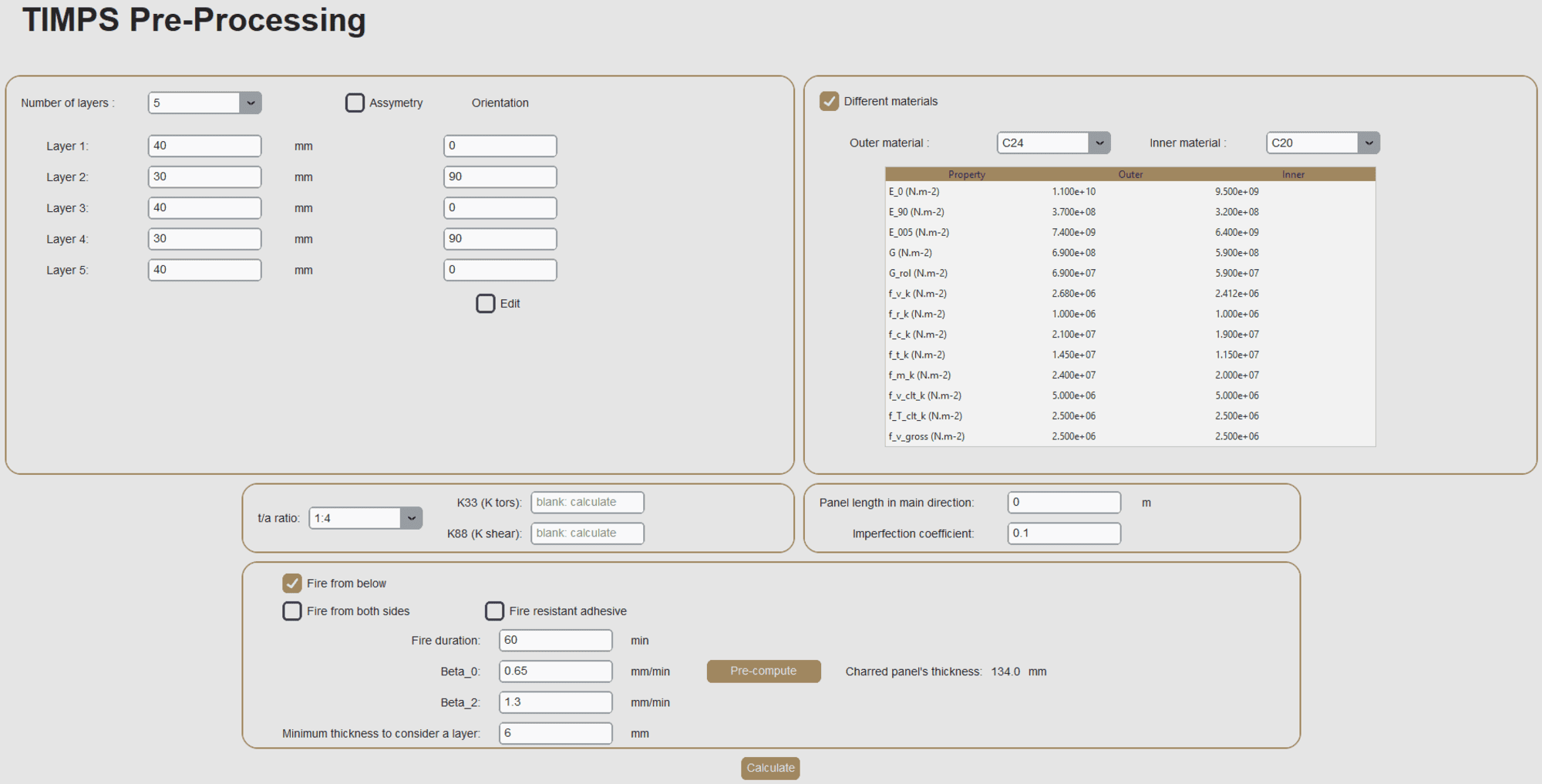
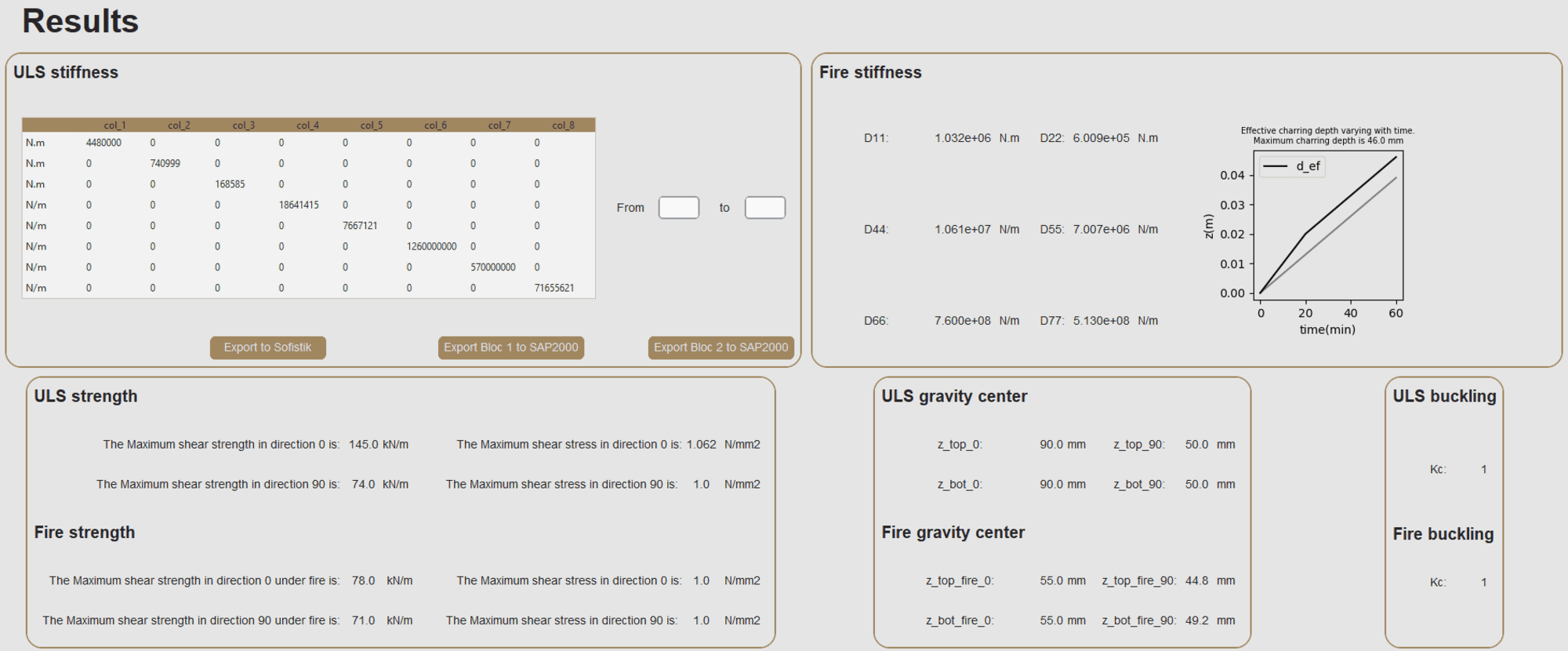
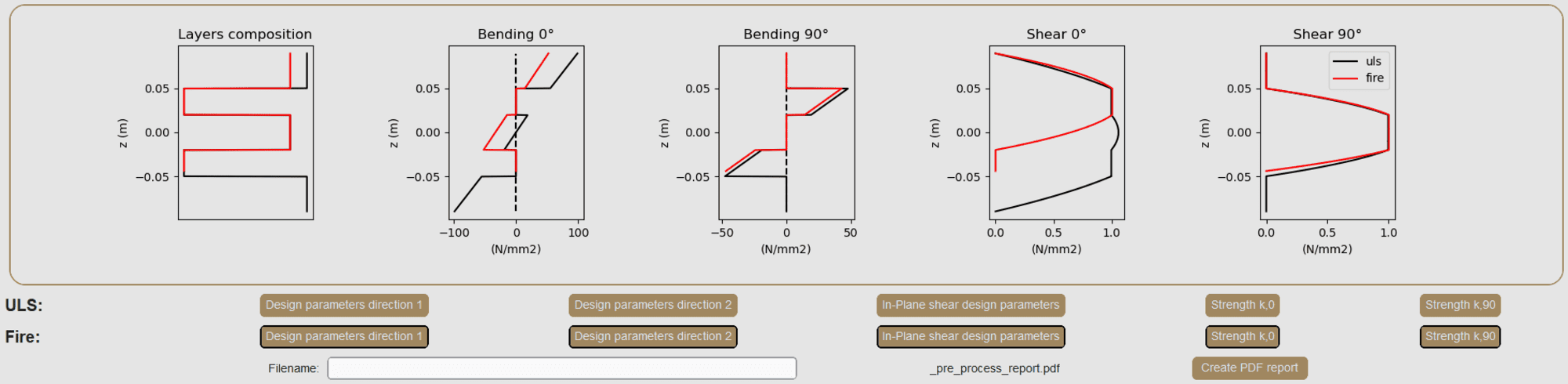
CLT mechanical properties definition
Available design for different materials among layers, asymmetry and adjustable fire charring rates.
Glued-laminated timber
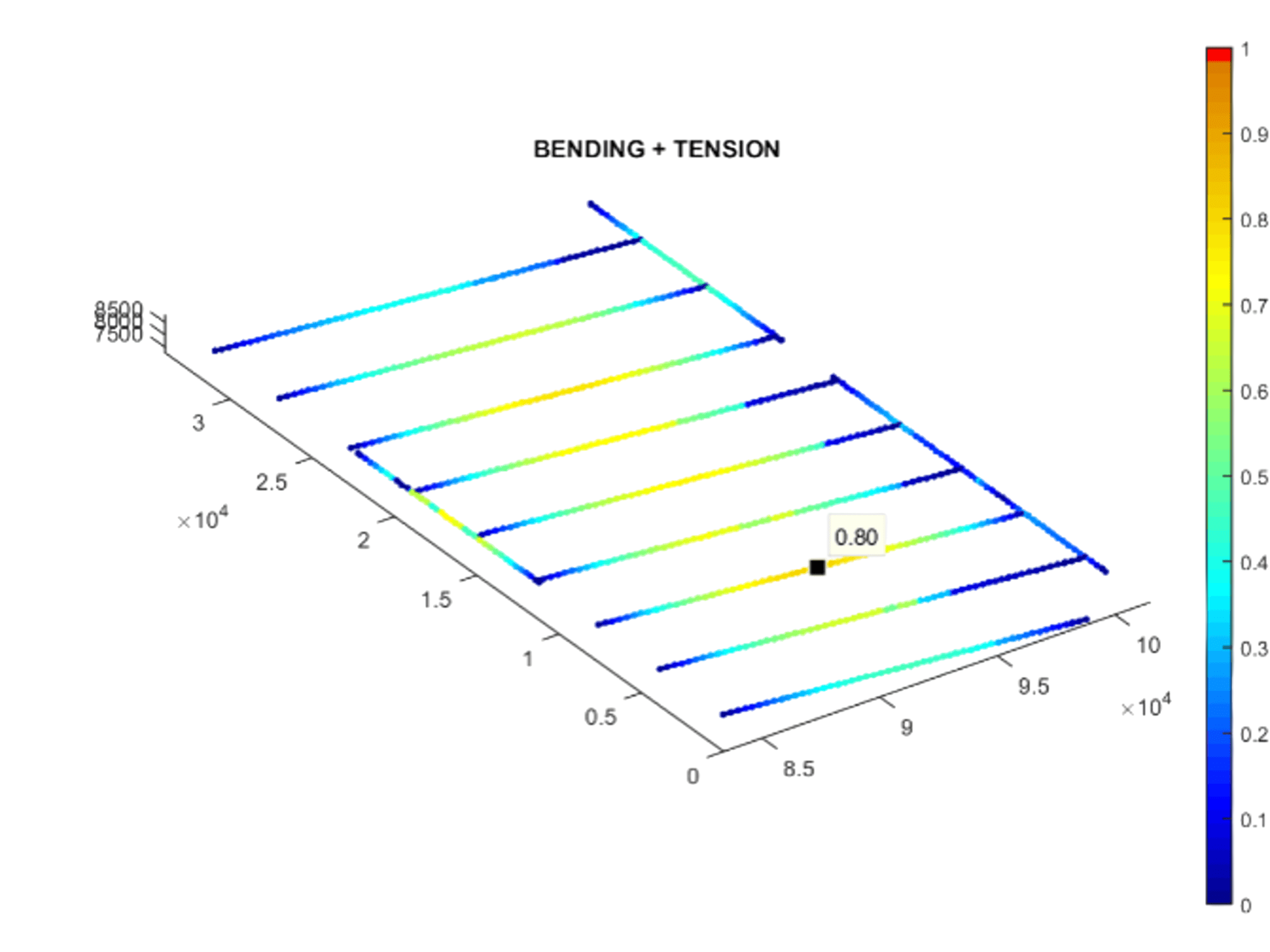
Results for linear elements.
Cross-laminated timber
Results for planar elements.
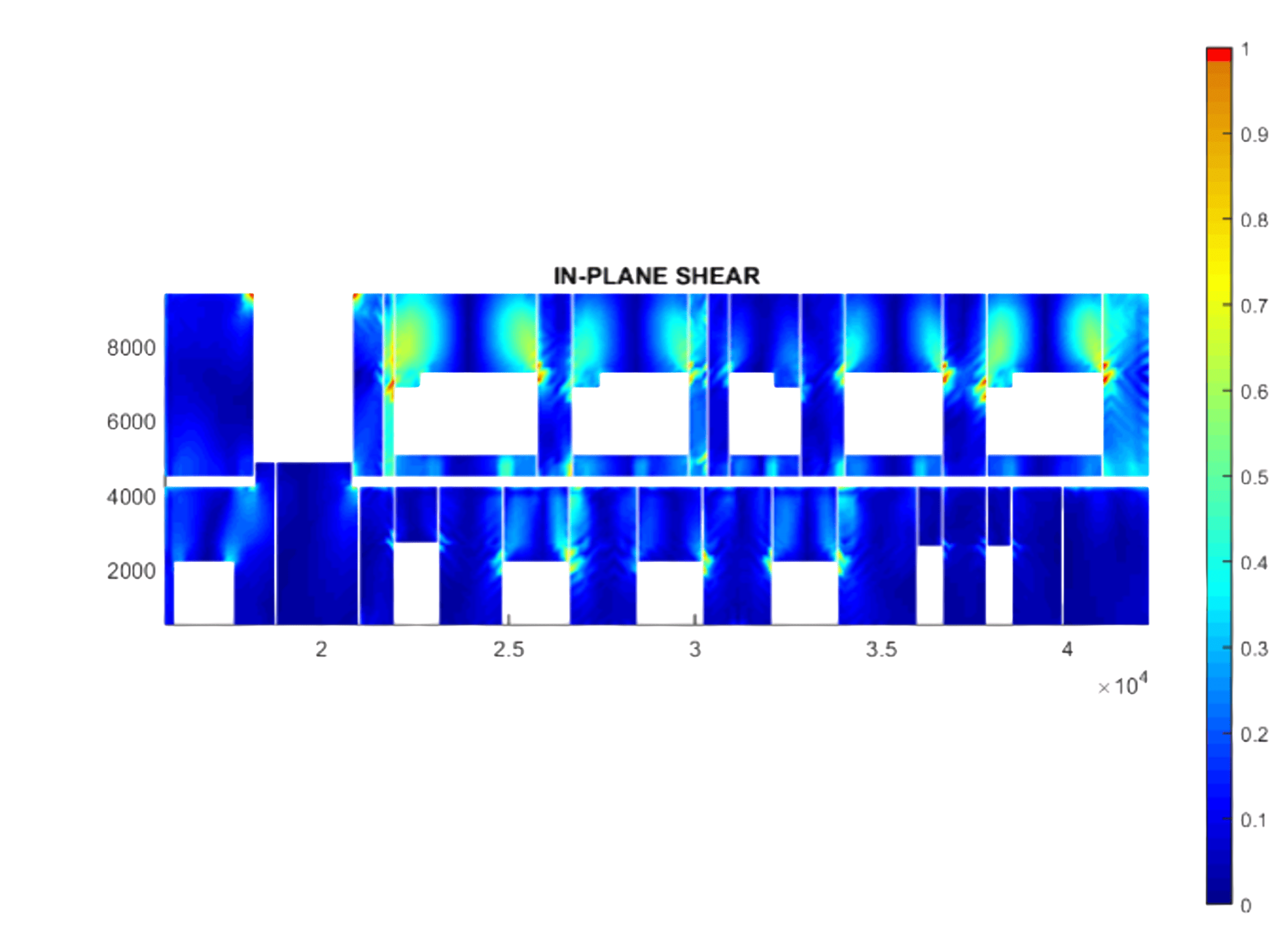
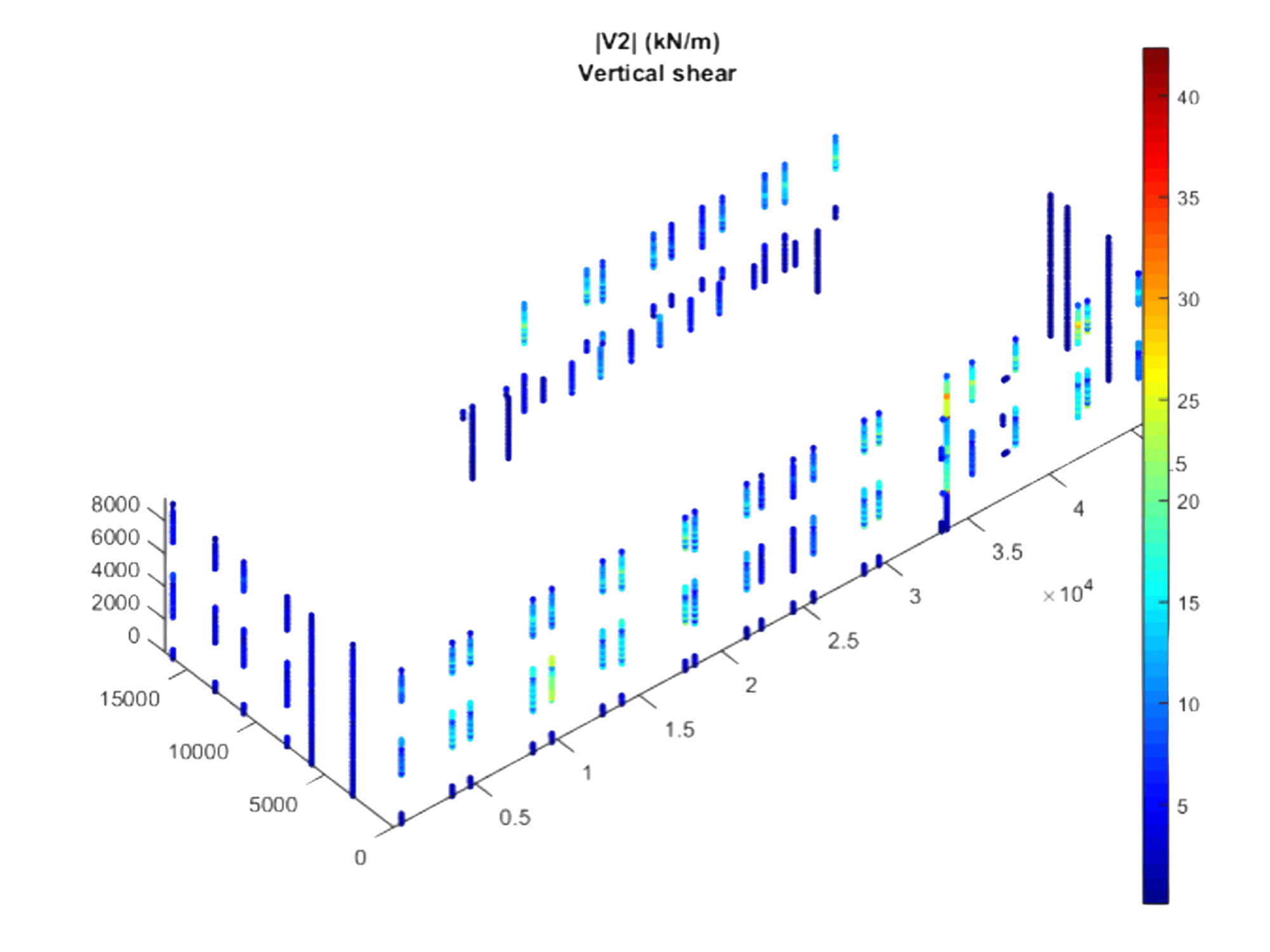
CLT joints
Results for screwed connections between CLT panels.
Timber Interactive Modelling and Post-Processing Software (TIMPS) is a design tool compatible with many commercial software packages for the analysis, design and optimisation of large timber structures based on the latest design codes and technical approvals.