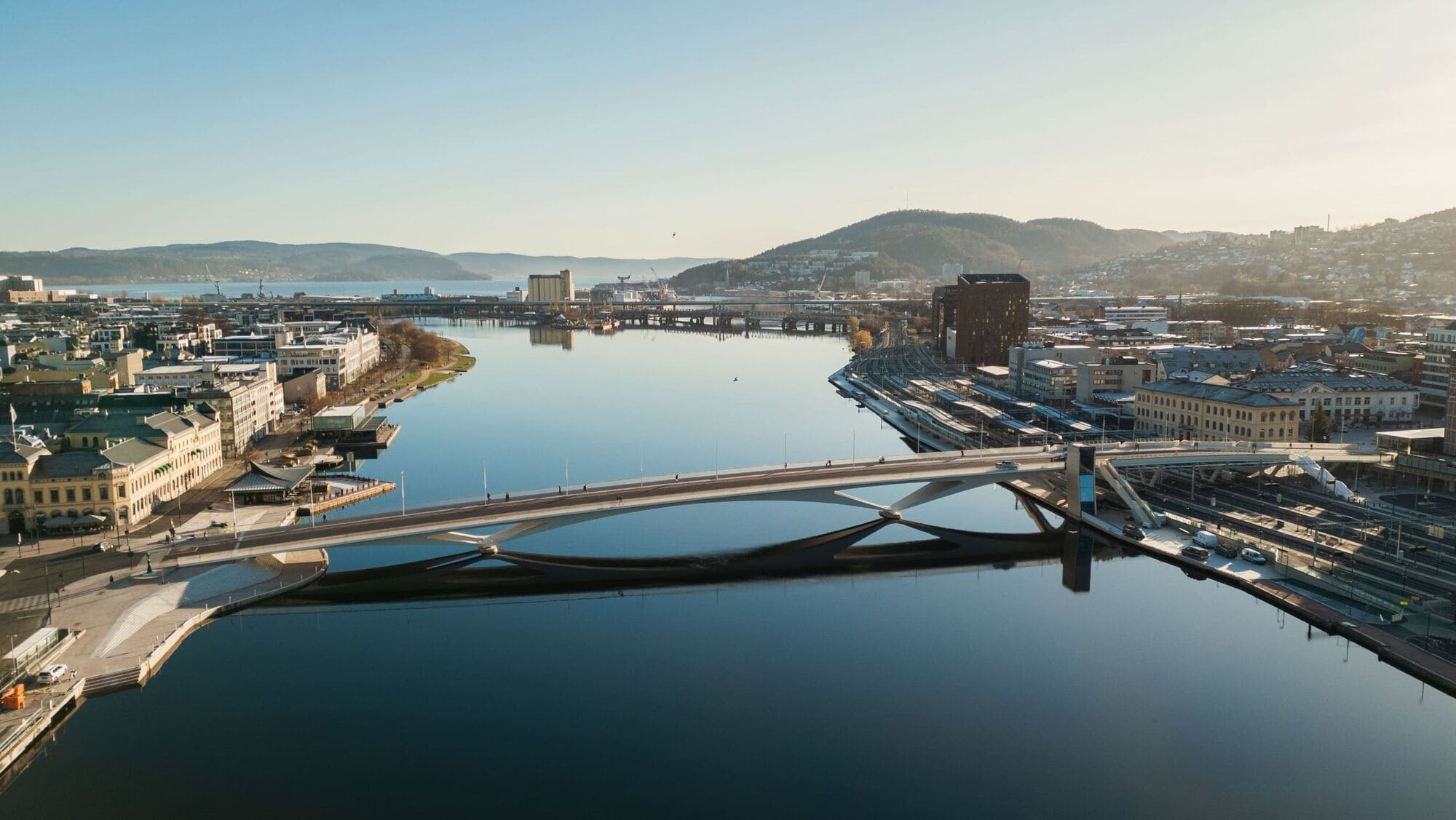
It is easy to assume that the design of infrastructure such as bridges is primarily driven by factors within the design team itself: education, experience, technical expertise, the tools available and, ultimately, talent and motivation. Yet there is another set of influences that lies beyond the team. Together, these form the context in which every project takes shape.
For bridge engineers, context extends far beyond topography. It is a complex combination of physical, landscape and cultural conditions that influence every stage of the design process.
The physical context begins with the ground that will support the bridge: its geology, bearing capacity and the availability of construction materials. It also includes the aggressiveness of the surrounding air, water and soil in relation to durability, as well as existing infrastructure and heritage assets that must be accommodated or avoided.
Closely connected to this is the landscape context. The setting may be forested, mountainous or glacial, or equally urban, industrial, agricultural or coastal. Just as important are the colours and textures that define a place: the grey of granite, the green of summer vegetation and the white of winter snow, all characteristic of the Nordic landscape. Light also plays a defining role. At these latitudes, the sun often remains low on the horizon or hidden behind clouds and mist, shaping the way both bridges and landscapes are experienced. Designing within this context means understanding how users will approach, cross and perceive the structure as part of its surroundings.
Designing with context in mind means understanding all of these factors and translating them into coherent design decisions.
Landscape and Topography
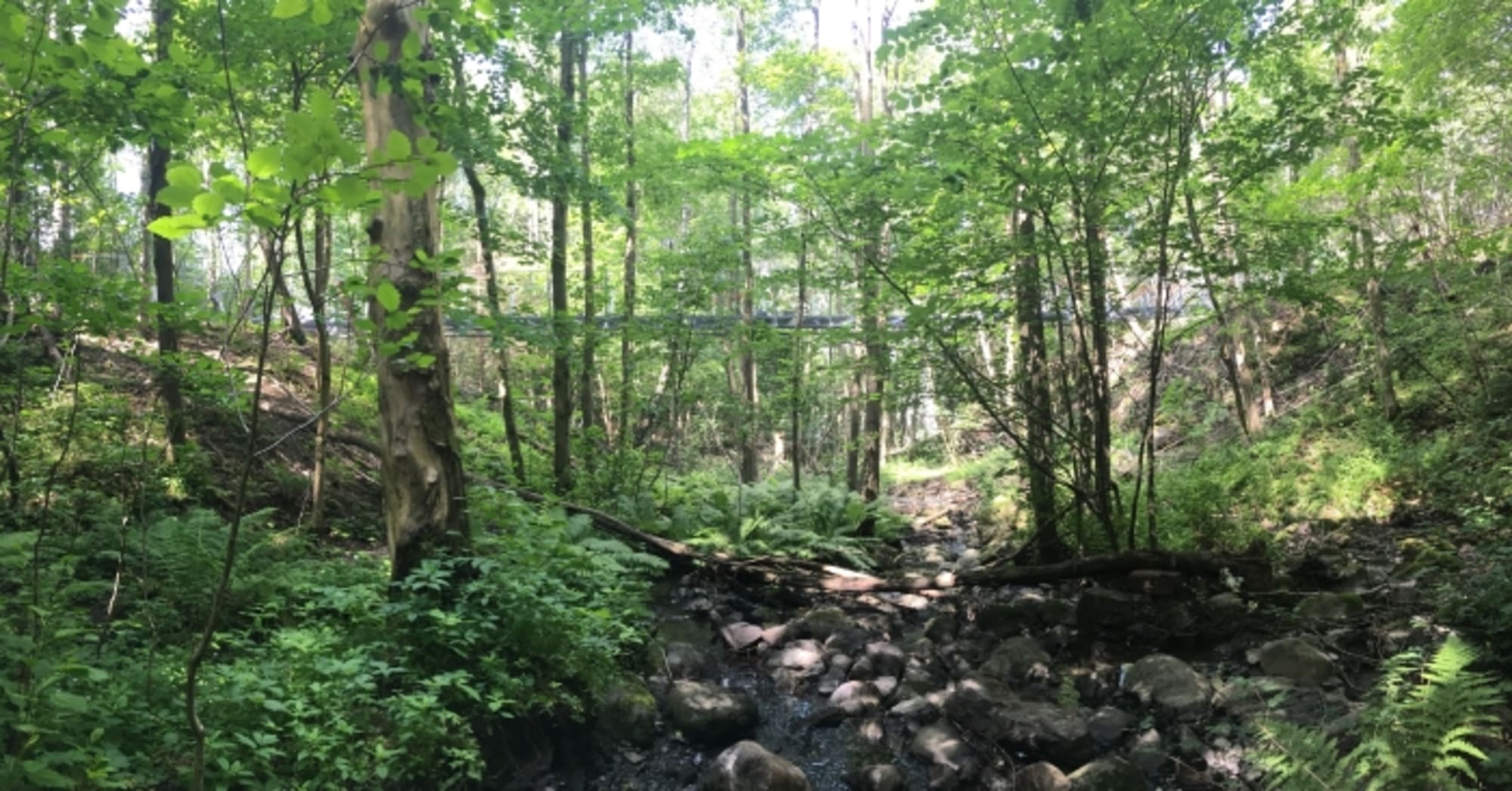
In regions where nature dominates, bridges are expected to become part of the landscape rather than compete with it. The Jungla Footbridge in Oslo is a good example. Suspended between two minimalist abutments, the galvanised steel suspension bridge crosses an urban forest. From a distance it almost disappears among the trees; up close, its structural logic becomes clearly legible. It demonstrates that technical precision and architectural restraint can coexist.
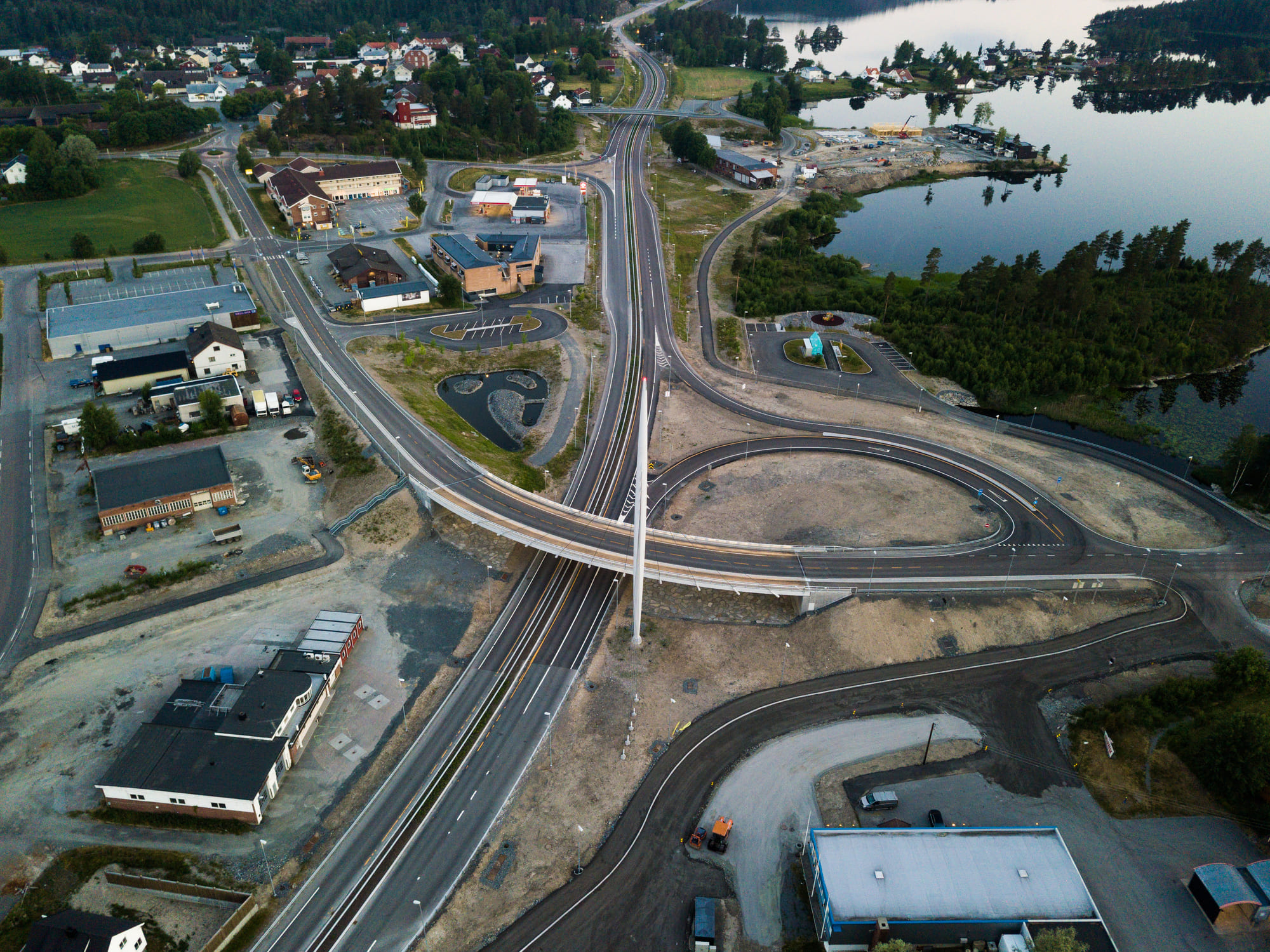
In contrast, projects in open landscapes may call for a more symbolic response. At Norgesporten, the bridge was conceived as a gateway, visible from a distance and marking the transition into Norway for travellers arriving from Sweden. Here, the architectural expression serves a clear purpose: reinforcing the bridge’s role as a landmark.
Geotechnics
Ground conditions in Norway range from highly competent granite bedrock to weak alluvial deposits, including the well-known quick clays. These particularly sensitive soils can lose strength rapidly when disturbed, leading to liquefaction phenomena responsible for several major landslides. Such conditions require foundation designs that minimise excavation and carefully consider construction sequencing. In these situations, engineering does not impose a solution on the site; it responds to the conditions that the ground allows.
At the opposite end of the spectrum lies sound bedrock. Norway’s mountainous terrain, together with the country’s long tradition of offshore engineering, has driven the development of an advanced tunnelling industry. This has had a direct influence on engineering culture and on the economics of transport infrastructure. As a result, Norwegian engineers are generally more inclined to consider tunnel solutions than their counterparts in many other countries.
The combination of shallow bedrock in some locations and weak soils in others has also encouraged the widespread use of foundations anchored into rock. Inclined micropile groups extending to bedrock, even at considerable depths, are common practice.
Climate and the Effects of Cold
The Nordic climate imposes exceptional conditions that influence both structural loading and detailing in ways that are rarely encountered in other parts of the world. Throughout the service life of a bridge, long periods of rain or fog are followed by snowfall and prolonged freezing temperatures. The presence of water is almost constant.
Under these conditions, durability becomes a primary design consideration. Wherever possible, bridges are designed with continuous decks, avoiding expansion joints both between spans and at the abutments. Preventing water ingress is essential, as freezing water can rapidly damage bridge components. Similarly, confined bearings are generally preferred over reinforced elastomeric bearings. Where expansion joints are unavoidable, designers must consider the wide seasonal temperature variations, from extremely low winter temperatures to relatively warm summers.
These significant temperature ranges also influence more fundamental design decisions, including pier slenderness, viaduct length and material selection. As a result, concrete bridges in Norway typically require exceptionally high concrete cover, while bridge steels are almost always specified with high fracture toughness.
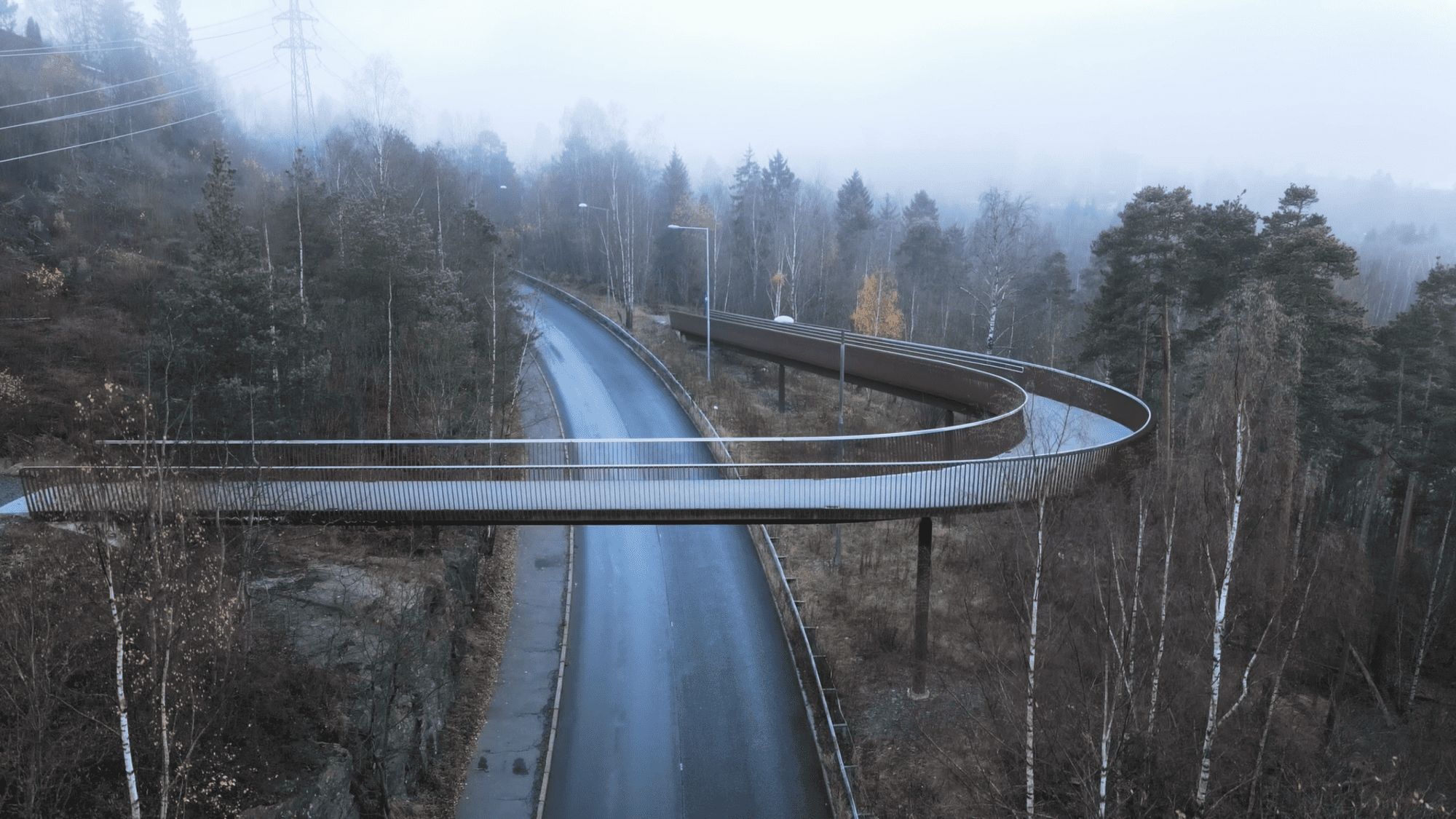
The widespread use of de-icing salt further influences material selection. Weathering steel, commonly used for bridges in countries such as Spain, is generally avoided on road bridges because of its susceptibility to corrosion in saline environments. On pedestrian bridges, however, where exposure to salt is limited, it can still be an appropriate solution. The Boomerang Footbridge in Oslo is an example where weathering steel was successfully used, combining low maintenance requirements with its distinctive architectural appearance.
Ice loading is another defining aspect of bridge design in Nordic climates. Floating ice can generate impact forces on bridge piers that exceed many other accidental actions and must therefore be considered from the earliest stages of design. These forces typically act transversely to the piers, but designers must also account for the longitudinal forces generated by expanding river or sea ice. Even on lighter structures, such as gantries or sign supports, freezing rain can lead to significant additional loads due to ice accretion.
Rather than relying solely on conservative code requirements, projects frequently involve specialist studies tailored to the specific site. These hydraulic assessments make it possible to justify reduced design loads, particularly for ice impacts, allowing more efficient structural solutions without compromising safety.
Ground freezing presents an additional challenge. Frost heave can affect shallow foundations unless appropriate measures are taken. Depending on the project, this may involve thermal insulation in accordance with national standards, designing foundations to accommodate ground movements, or combining both approaches.
River Navigation and Movable Bridges
River navigation remains an important consideration in both Norway and Sweden. Many rivers that appear relatively modest are regularly used by commercial and recreational vessels. Instead of relying on generic vessel impact loads, designers often commission specialist probabilistic studies to predict navigation patterns and ship collision forces. These analyses make it possible to justify lower design loads and, consequently, more efficient or even otherwise feasible structural solutions.
This approach is particularly important for bridge piers and, above all, for movable bridge decks, whose lightweight construction makes them especially sensitive to accidental actions. Designing movable bridges therefore requires balancing structural efficiency with reliable mechanical performance.
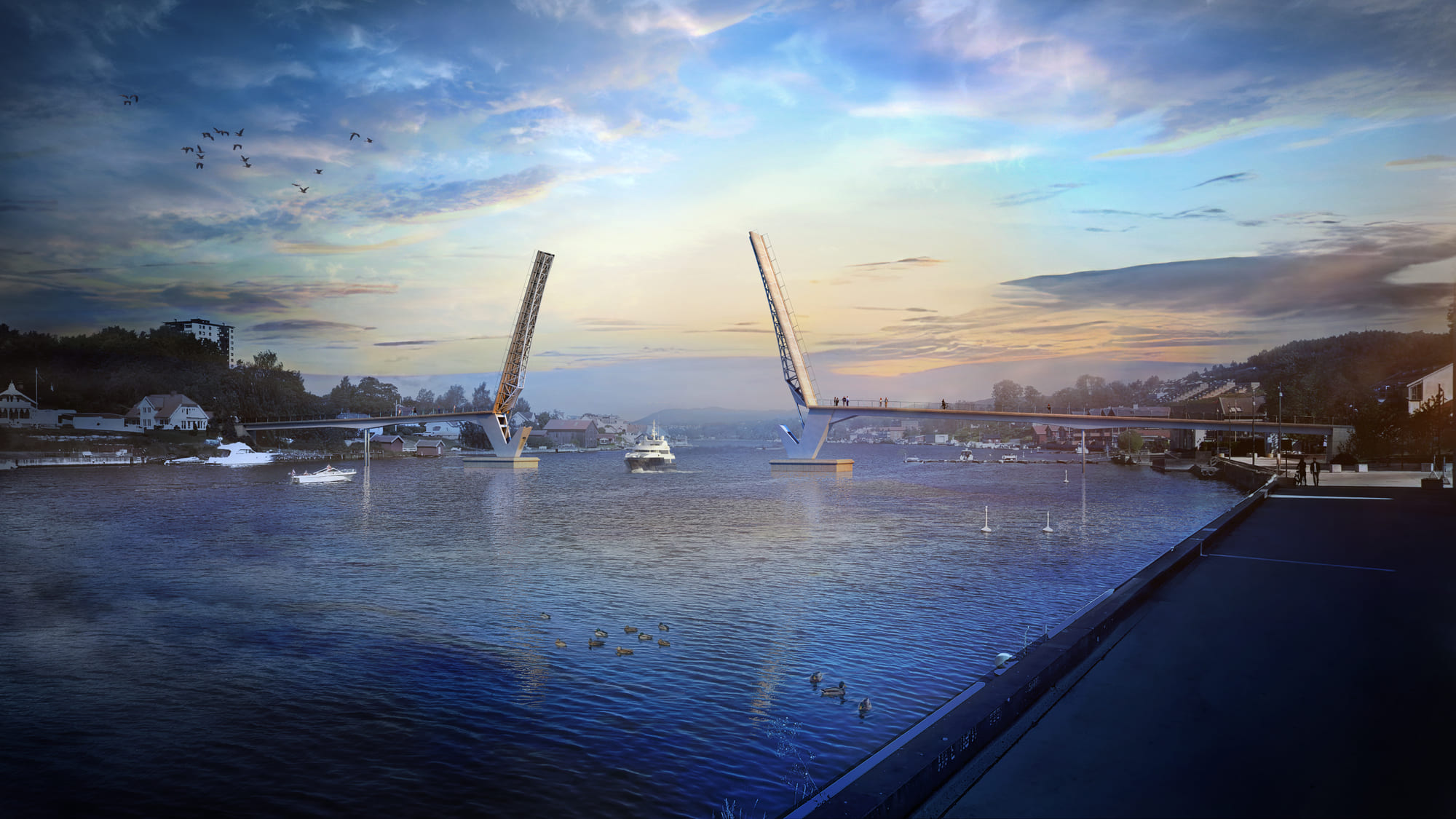
The Moldhaug Footbridge illustrates this integration of engineering and architecture. Its hydraulically operated bascule system, designed without counterweights, demonstrates how mechanical functionality and structural form can be developed as a single coherent solution.
Material Selection Following Structural Failures
In recent years, several timber bridge failures, including the collapse of the Tretten Bridge, have affected public and institutional confidence in timber structures. Although timber remains an appropriate solution in many situations, these events have inevitably influenced client perceptions.
Today, many public authorities tend to favour more conventional materials such as steel and concrete, considering them to be more robust and reliable. Material selection has therefore become more than a purely technical decision; it is also shaped by cultural perception and public confidence.
———————————————————————————
Designing bridges in the Nordic countries involves far more than satisfying codes and structural requirements. It is a discipline that demands careful observation, a deep understanding of place and an ongoing dialogue with the surrounding environment.
Climate, culture and technical constraints are not passive parameters to be accommodated. They are active drivers of design decisions. Every bridge represents a synthesis of these different influences, and the better they are understood, the more coherent the final solution becomes.
A bridge is more than a structure. It is a way of understanding the landscape and our relationship with it. The Nordic experience demonstrates that structural excellence and sensitivity to context are not opposing ambitions but complementary ones. Constraints, when properly understood, become opportunities. It is in the balance between context, function and form that the true value of bridge design emerges.